
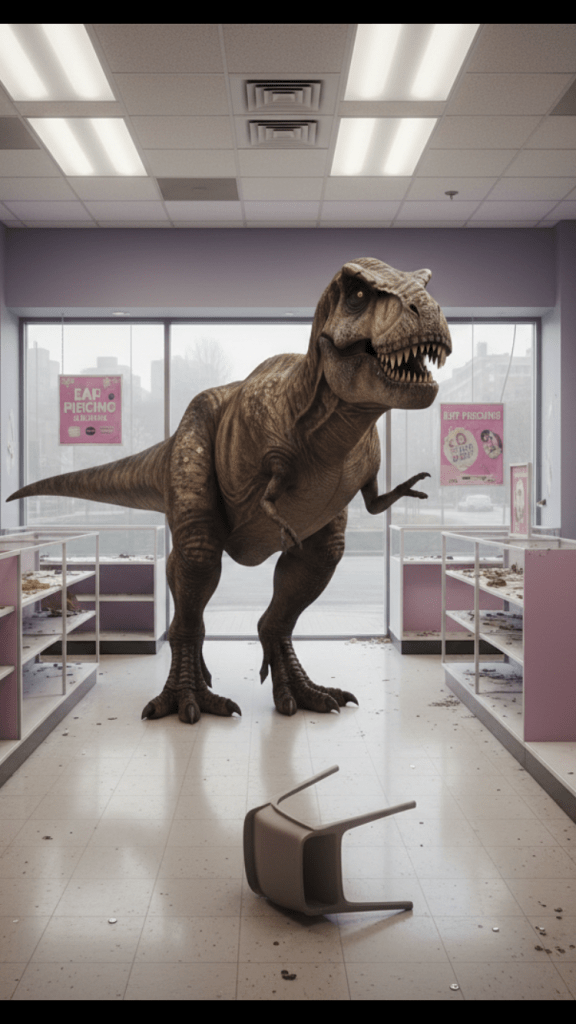
The holidays fade not with a bang, but with a vacancy. The music slips back into its dull, familiar hum, the fluorescent lights still buzz overhead, and the fixtures—picked over but untouched—remain in place. And yet, the ecosystem feels altered. Where there were once crowds – dense, noisy, migratory – there are now long stretches of silence punctuated by the occasional lone shopper, moving slowly, cautiously, like a species adapted to scarcity.
Working retail in early January feels less like a slowdown and more like a boundary layer – a transition from one world into another.
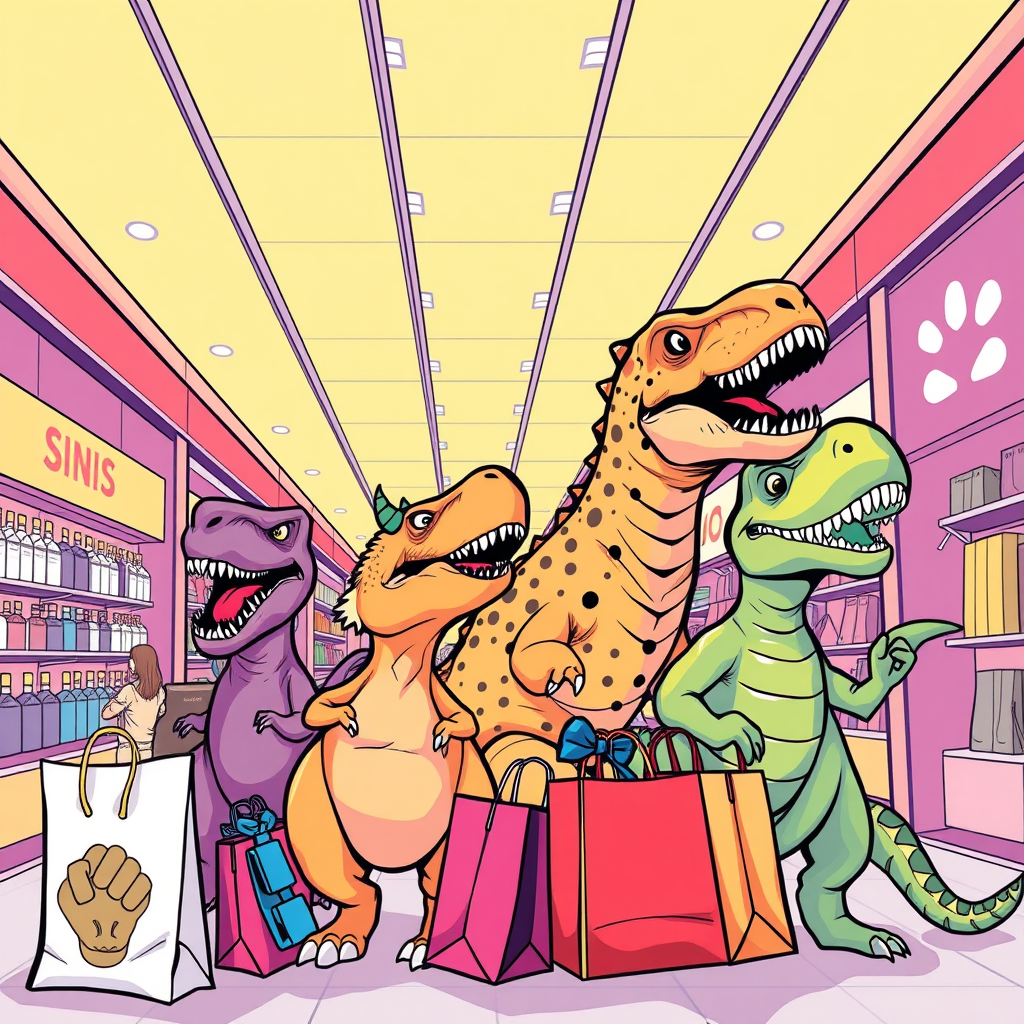
During the holidays, the store becomes a kind of Late Cretaceous ecosystem—an environment where abundance rules and large, conspicuous species move in herds. Energy spikes, resources churn, and everything is engineered for scale, spectacle, and speed. It’s loud, vibrant, unsustainable—yet for a moment, gloriously alive.
And then it ends.
Standing in the store now feels like standing in the early Cenozoic—the geological era that began about 66 million years ago, after the dinosaurs vanished. Aware of what has passed, unsure of what will rise to dominance, yet surrounded by quiet persistence.
The disappearance is abrupt enough to feel uncanny. One day, the megafauna are everywhere; the next, they are gone, and only the walls and fixtures remain. The displays persist, but the dominant life forms – holiday shoppers – have vanished, leaving behind a changed landscape
In deep time, this is a familiar pattern.
When the Mesozoic Era ended, the great dinosaurs didn’t fade—they disappeared in a single, decisive break. What rises in their wake is not rebirth, but the muted Paleocene: a world of modest forms, gentler rhythms, and creatures learning to inhabit the emptiness left behind. Life goes on, but it moves differently now.
January retail feels like that moment. This is not the age of spectacle but rather the age of endurance.
My store in early January belongs to the small and the patient. The single browser, the quiet returner, the employee learning how to work in absence rather than abundance. It is an ecosystem recalibrating – conserving energy, adjusting expectations, and waiting.
In paleontology, extinction is not the end of life, its the end of a configuration of life. What follows is not emptiness, but adaption. The same is true in retail.
January’s quiet is not a collapse but a needed lull, a low‑energy pause that allows the ecosystem to recalibrate. The shelves remain, the lights hum overhead, and in that stillness is the sense that something new will arrive—not soon, not with spectacle, but with certainty.
Paleontology is not the study of spectacle. It is the study of what survives disappearance, of fragments, impressions, abundance, and the patience required to extract meaning from them. It asks us to pay attention not only to dominance, but endurance – to the quiet intervals between eras when life reorganizes itself without fanfare.
It’s easy to romanticize the roar of the holidays, just as it’s easy to fixate on the grandeur of Tyrannosaurus rex in the Mesozoic. But real understanding comes from the quieter chapters—from the Paleocene mornings, the nearly empty stores, the small signs of persistence that show the system is still alive but fundamentally changed.
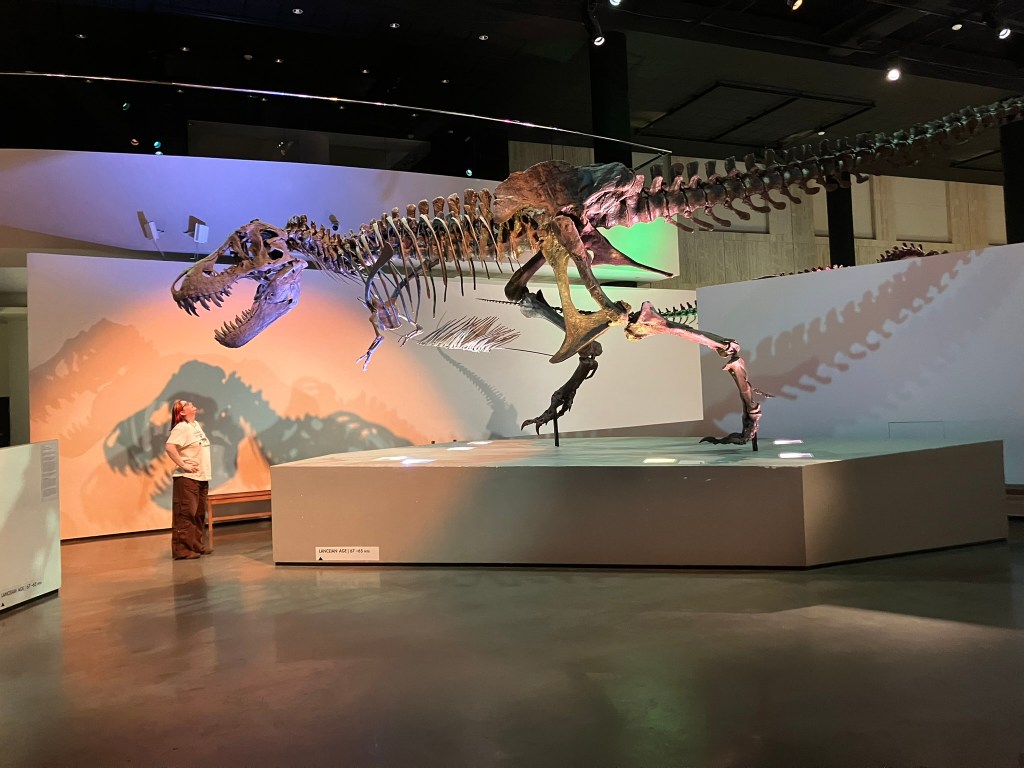
I am a retail naturalist, studying the modern mall as if it were a Mesozoic ecosystem. Through the eyes of T. rex, Deinonychus, Dreadnaughtus, Oviraptor, and other ancient creatures, I observe how shoppers gather, migrate, clash, and comfort one another. Shelf Life: Lessons from Retail-Display to Decision is where those field notes become warm, thoughtful stories about the humans who move through my contemporary retail ecosystem—interpreted through the logic of creatures long extinct.
This post is part of a broader practice of observation that threads through all my writing. Coffee and Coelophysis looks at the world of dinosaurs through the lens of deep‑time research. The Kuntry Klucker turns that same curiosity toward backyard chickens and everyday life. Both blogs share the same habits of noticing, studying, and storytelling about the living world. You can also explore more of my work in My Online Writing Portfolio.
 Shelf-Life: Lessons from RETAIL. Display to Decision
Leave a comment