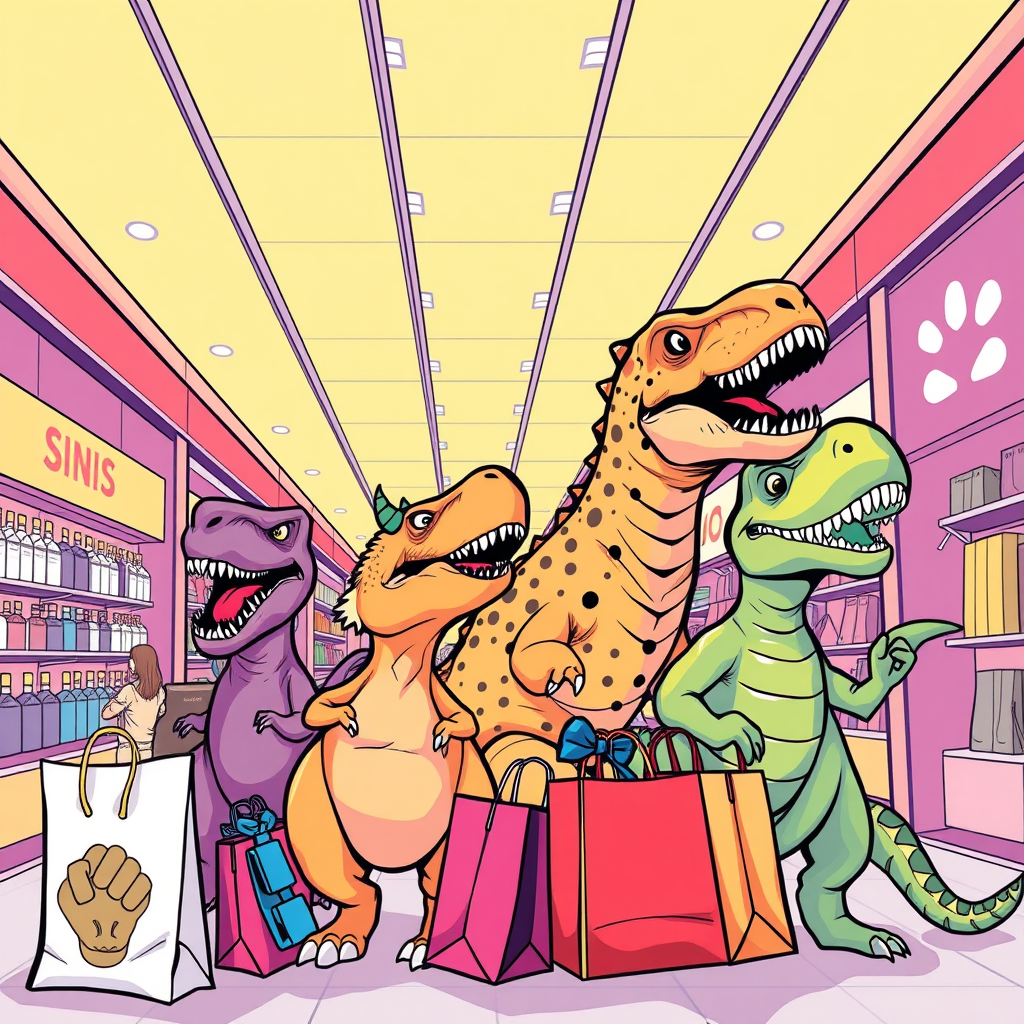


In the world of accessory retail, nothing vanishes faster than a wall of hair accessories on a bustling weekend. One moment it’s a glittering forest of scrunchies, clips, and headbands; the next, it’s stripped bare, reduced to emptiness and lonely pegs.
The sight always brings to mind Dreadnoughtus, the colossal titanosaur built for bulk consumption. When a herd thundered through a forest, they didn’t simply graze—they reshaped the landscape.
From my perch at the register, I often chuckle at the modern-day herd. Shoppers sweep in, defoliating the display of bows, scrunchies, and clips until not a trace remains.
Massive Body = Massive Impact
Dreadnoughtus didn’t merely nibble—it transformed. At nearly 65 tons, its sheer mass shaped everything in its orbit. The name itself, chosen by its discovery team, reflects a creature so immense it had nothing to fear. This titanosaur didn’t just coexist with its environment; it redefined it. Each step compressed the soil, reverberating like thunder across the landscape. Each feeding frenzy stripped entire swaths of vegetation. Every movement altered the very architecture of the forest. Paleontologists call this ecosystem engineering—the phenomenon where giant herbivores reshape their world simply by existing.
Herbivore Strategy = Shopper Strategy
Dreadnoughtus never foraged alone—and neither do its modern counterparts, weaving through the fixtures of my retail store. Like the great herbivores, shoppers move in coordinated, purposeful waves. They target the most coveted items first, stripping them with an efficiency that leaves unmistakable marks on the display. The movement isn’t random; it’s rhythmic. Each individual plays a part in a collective pattern that reshapes the environment itself.
From my perch behind the register, I watch the store stir to life. Shoppers drift in herds, gliding past glittering scrunchies and bobby pins, hands reaching instinctively for the brightest holiday bows—the most coveted treasures first. There’s a rhythm to it, a quiet choreography, almost graceful in its intention—until suddenly the wall resembles the aftermath of a prehistoric feeding frenzy.
In my mind, I see Dreadnoughtus lumbering through a dense Cretaceous forest, its massive neck sweeping down to strip the high leaves as the herd moves in waves—deliberate, efficient, leaving everything it touches transformed. Holiday shoppers mirror this perfectly: delicate yet decisive, moving as a collective, plucking the “nutritional” bits of the display while leaving behind the odd singles, mismatched colors, and forlorn scrunchies. It isn’t chaos—it’s strategy. It’s herd behavior, and it carries a strange majesty, a familiar echo of prehistory hidden in bows and bobby pins.
Watching this unfold, I feel equal parts amusement and awe. There’s a strange satisfaction in seeing the patterns of collective attention, the quiet logic of desire at work. Within minutes, the wall is stripped bare—empty pegs and crushed clips the only remnants. From behind my register, I can’t help but laugh at the parallel: prehistory and holiday shoppers, bound by the same instinct to gather, to move, to leave their mark—with a few satin scrunchies as the inevitable casualties.
Ecosystem recovery = store recovery
And then comes recovery. In the forest, plants return—saplings pushing through soil once pressed by colossal feet. In my store, the wall is replenished, pegs refilled, colors rearranged. The rhythm is the same: consumption followed by restoration, depletion followed by renewal. It is an ecosystem, whether glittering hair accessories or towering ferns. Seeing it this way makes me pause, softens my perspective, and reminds me that nothing lasts forever—yet every action leaves a mark, and every mark tells a story.
Working in accessory retail has taught me that we’re not so different from the giants of the Jurassic. Whether it’s a 65‑ton herbivore reshaping its forest or a wave of shoppers clearing a wall of hair accessories, consumption reveals what we cherish, what we fear losing, and how we move together as a collective force.
Through the lens of Dreadnoughtus, shopping becomes a reminder that every ecosystem—ancient or modern—follows the same rule: resources appear, resources vanish, and life adapts to the ebb and flow. There’s something reassuring in that. Beneath the frenzy lies rhythm, pattern, and a fragment of prehistory tucked among the scrunchies and bobby pins.
Humans, after all, aren’t so different from prehistoric herbivores—just a bit shinier, and far better accessorized.
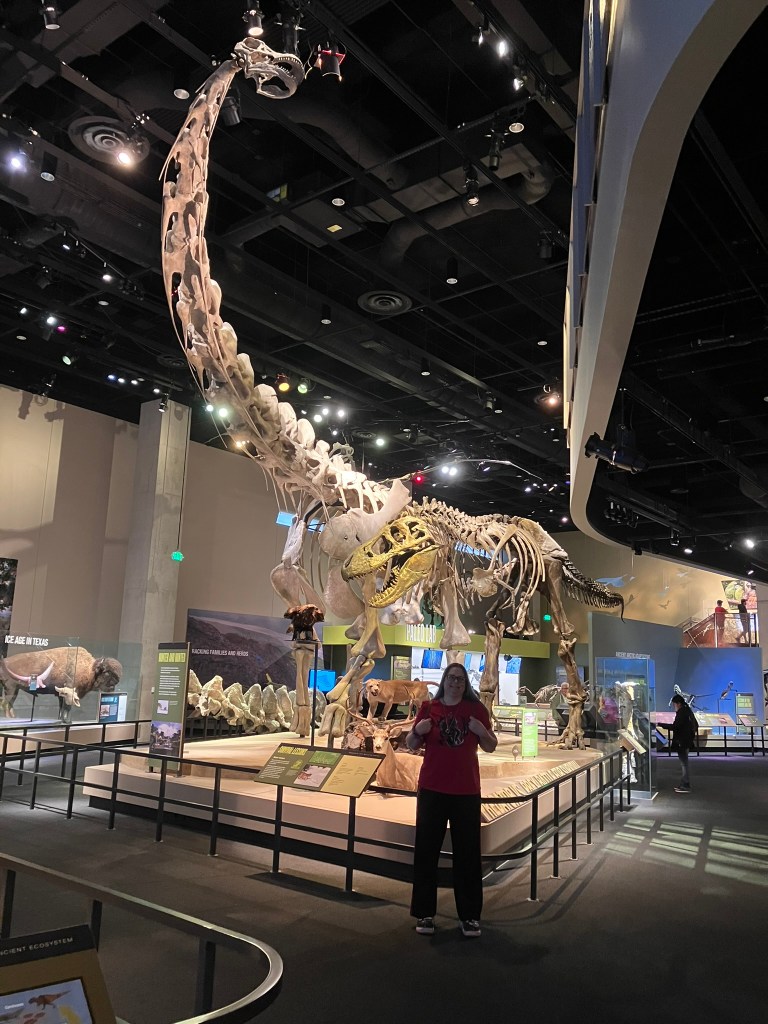
I am a retail naturalist who studies the modern mall as if it were the Late Cretaceous. Through the lens of a T. rex, Deinonychus, Dreadnaughtus, and other ancient creatures, I observe how shoppers gather, migrate, clash, and comfort one another. Shelf Life: Lessons from Retail is where those field notes become warm, thoughtful stories about the humans who wander through my contemporary retail ecosystem.
 Shelf-Life: Lessons from RETAIL. Display to Decision
Leave a comment